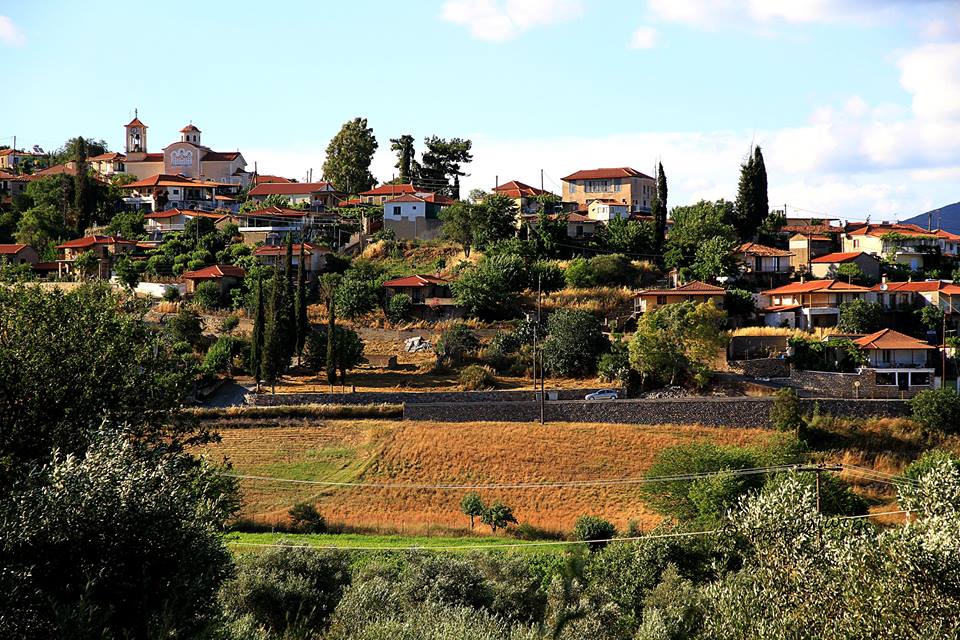
Pellana is a tiny village located in the North of Lakonia Greece. It may not mean much to readers, but it is this tiny village that was the ancient capital of Lakonia, long before the Dorians’ and subsequently the Spartans.A copy of the article may be downloaded by clicking on:PELLANA HELEN OF TROY PALACE TOMBS LOOTED
It was the home of King Tyndareus, Helen of Troy and her husband King Menelaus (master of the War cry) as depicted in Homers Iliad. Why is this tiny village so important to Western culture and why it must be preserved? The reason being is that this was the home of Helen of Troy when she was allegedly abducted by the Prince of Troy (Paris).
Recently tomb robbers seeking ancient artefacts and precious objects to be sold on the black market attempted to break into one of the many royal tombs located some 500 metres from the current township of modern Pellana. It appears that they had dug down at least four metres to reach the entrance to the tomb. To get into the tomb that had to excavate tons of stone fillings put into place by the Government Department of Archaeology.
The tomb located opposite other known royal tombs was sealed up for reasons known only to the Department of Antiquities. To the looters it was an open invitation to dig and steal any precocious items that may be of value to collectors.Given the current financial crisis in Greece at the moment, I am somewhat surprised that looters had not attempted it earlier.
It is of interest to note that the Archaeologist Spyropoulos who uncovered other major ruins near the rocky outcrop some 500 metres away from the royal tombs went on record, stating that it was the home of Helen of Troy and the ancient capital of Lakonia of the Hellenistic period and/or of the Mycenaeans. Spyropoulos has placed his reputation on the line by making these statements. Statements that have caught the attention of the British historian and author, Paul Cartledge known for his scholarship of the Spartans.
Modern new roads have been put into place leading to the fenced off tombs and the rocky outcrop that housed the palace. The palace itself is surrounded by the ruins of ancient homes, store houses and close to the ancient highway that led to Sparta itself. That ancient highway once dotted with small inns, towns and stopovers for the weary traveller have now all but been buried under concrete and asphalt after thoroughly been studied, photographed and recorded. These small hamlets were found every five kilometres reaching from Megalopolis down to Sparta and onto the seaport of Gytheio a seaport.
According to rumours circulated amongst the locals, the reason for the Pellana not obtaining approval for further excavation is based on rivalry with that of Modern Sparta who is concerned that it may lose its tourist trade. I am of the belief that this is not the case and that the Department of antiquities stopped the diggings for other reasons not made public at this point in time. In any case there is no infrastructure at this point in time to support tourism on a large scale and Pellana is visited occasionally by tourists on a bus using the modern freeway. This may soon change with the new highway as it is only a two hour drive from Athens, 40 minutes from Tripoli; 10 minutes from Sparta, 45 Minutes from Gytheio (sea port) and one and a half hours from Nauplio a tourist centre and first capital of Greece on gaining independence from the Ottoman Empire.
I cannot for the life of me cannot understand why such a wonderful and exciting find must be hidden from the world. A world eager to view and read further about the origins of the writings of Homer. It will be a wonderful opportunity to bring to light what has been covered for centuries. IfHeinrich Schliemanncan do it, then so can we. I am sure that the locals would welcome tourists eager to see the ruins of an ancient civilization that has its origins in Homer.
We shall wait and see what the Government and the Department of Antiquities decide upon and whether it will help the local and surrounding economy. I would like to think that with some good planning, external investors and with the support and assistance of local authorities, Pellana can once again became a centre of attraction without the looters taking preference. Pellana has been asleep for centuries and it is time to show case it to the world.
As a point of interest, I have for the past 40 years dedicated myself to researching the origins of the Sea Peoples and that of the history of the Pellana. Somehow I am of the opinion that the two are joined, but I don’t have the evidence to prove my point of view other than to rely on Homer. As I will be going to my place of Birth (Pellana Lakonia Greece) in April this year, I hope to conduct further research and publish whatever findings that I may discover so that the village once again becomes the focus it deserves. Therefore I hope that my research will be equal to the task of writing in English the history of Pellana. In any case it has long been on my bucket list. I will endeavour to keep readers posted. I do hope that the looters are apprehended and made an example of.
Peter Adamis is a Journalist/Social Media Commentator and writer. He is a retired Australian military serviceman and an Industry organisational & Occupational (OHS) & Training Consultant whose interests are within the parameters of domestic and international political spectrum. He is an avid blogger and contributes to domestic and international community news media outlets as well as to local and Ethnic News. He holds a Bachelor of Adult Learning & Development (Monash), Grad Dip Occupational Health & Safety, (Monash), Dip. Training & Assessment, Dip Public Administration, and Dip Frontline Management. Website: abalinx.com Contact via Email: [email protected] or via Mobile: 0409965538
This is dedicated to Dimitrios Roumpos and his wife Vasiliki who were close friends of my father and mother Vasili and Kaliopi Adamis. A copy of the article may be downloaded by clicking on:DIMITRIOS ROUMPOS
In a far flung village in Northern Laconia, called Foundeika, the bell tolled recently for one of its sons. A son called Dimitrios Roumpos who had left the village as a relatively young man. Strangers may well ask who was Dimitrios Roumpos and his friends would respond that he was resourceful and courageous man by nature. Born in the tiny village of Foundeika during the depression years, Dimitrios grew to rely on his instincts hewn by his early life experiences. Dimitrios was a strong willed man whose courage never failed him in the face of adversity.
Life in Greece was indeed harsh, employment was at all time low where one had to have his wits about him to live and still retain ones sanity. The arrival of WW2 and the subsequent Greek Civil War only added further to the stresses faced by many of his generation. Dimitrios served as a soldier in the mortars section with the Government forces fighting against the communist rebels during the Greek Civil war.
During WW2 Dimitrios and his brothers lost their mother who died of shock as a result enemy air raids over the village. When their mother died, the brothers, Dimitrios, Giannis and George banded together to help with the domestic chores in order to assist around the home in memory of their mother. It was a terrible time for many where it a bred a generation of fear and mistrust into the hearts of the populace and only the fit could survive the maelstrom of the evils that besot the land of Greece. However despite these early childhood life experiences he survived the ravages of time and lived to a ripe old age while others around him succumbed to the maladies of life.
Like many others of his generation, he left his village to seek a better a life in a country far from home and familiar surroundings. He arrived in Melbourne in January 1955 he and his wife Vasiliki was sent as a couple to Bonegilla, a northern town of Victoria and was employed in Shepparton picking stone fruits and returning back to Bonegilla at the end of the day. After a period of time, Dimitrios and his wife relocated to the inner suburb of Melbourne, to a boarding house in Moore Street Fitzroy while both parents worked.
One parent worked at night and the other during the day in order to look after Peter their son. They raised funds to purchase their home in Carlton, and it was there that they could be found some 59 years later. If life was tough in the old country, then Australia became an environment where Dimitrios earlier skills and knowledge helped him to acclimatise and raise his family.
Dimitrios being an unskilled migrant worked diligently in a variety of industries such as glass, plastic electro plating, and service of motors and also in manufacturing. The early years were difficult but he and his wife Vasiliki managed to gather together the necessary funds to purchase a home and pay off the mortgage as well as raising their two children Peter and Helen.
Their home was also used as a first point of call for the many migrants that arrived from their parts of Laconia seeking advice and support in Australia. Those were the days when families were close knit and many a party was held much to the chagrin of their neighbours not used to boisterous and happy go lucky people.
Given his background and life experiences he ensured that his children were equipped with the necessary skills and knowledge to face the challenges of life and to overcome them. On reflection one could say that he may have been somewhat harsh and tough love meted out to his children, but that was the only way that he knew how to toughen them up.
Although a man of few words and reserved in demonstrating any affection towards those close to him, he loved his wife and children dearly in his own way. He and his wife ensured that their children received the best education that they could afford and provide as well as instilling into them the necessary mental toughness that many other children did not possess or acquire. Dimitrios loved fishing and would often be seen fishing at Kereford Road Pier at Albert Park for hours and would come home with enough fish to feed the family for a week.
Both his children, Peter and Helen are strong, silent and courageous with the capacity to see things through no matter what life challenges they face. Peter and Helen have families of their own with children of their own who are now adults and in the work force. Both Peter and Helen have said that despite their harsh upbringing, they have felt nothing but love and admiration for both their parents of whom their mother Vasiliki is still alive and living in Carlton on a pension. Dimitrios and his wife Vasiliki gave their son Peter a deposit to purchase his first home, encouraging him to pay off the mortgage whilst he had his first job. Dimitrios and his wife Vasiliki also gave much assistance to their daughter Helen throughout the years, especially through times of great need and hardship.
In his later years, Dimitrios would often be seen at the Pallaconian Brotherhood ‘Leonidas’ community hall, conversing with men and women of his generation, many of whom he grew and developed during the early years of migration. Dimitrios would be picked up by his son Peter from Carlton, dropped off at the community hall and return the same way, unless Dimitrios took public transport.
One of the many joys that Dimitrios enjoyed was through the eyes of his grandchildren. Dimitrios was overjoyed to be at his grandchildren graduation and seeing them develop into young adults made his day, often speaking of them in an affection manner. He was very proud of the extended family and rejoiced in following their careers as they developed.
As time wore on it became apparent to the family that Dimitrios required specialist help as his wife and children were not in a position to provide the health services and support to retain a certain quality of life. As such Peter his son during his research found an aged care home where his father’s needs would be met. Whilst Dimitrios was a guest at the aged care Peter and his sister would visit their father regularly along with other friends of the past.
Unfortunately Dimitrios had a fall which reduced his capacity to enjoy a reasonable quality of life and was bedridden for some time before he too succumbed to what society calls old age. He passed away peacefully with his family by his side. Dimitrios will always be remembered for his smile, his tenacity, courageous in the face of adversity, strong willed and confident manner that could always be counted upon to find a solution.
Peter Adamis is a Journalist/Commentator and writer. He is a retired Australian military serviceman and an Industry organisational & Occupational (OHS) & Training Consultant whose interests are within the parameters of domestic and international political spectrum. He is an avid blogger and contributes to domestic and international community news media outlets as well as to local and Ethnic News. He holds a Bachelor of Adult Learning & Development (Monash), Grad Dip Occupational Health & Safety, (Monash), Dip. Training & Assessment, Dip Public Administration, and Dip Frontline Management. Contact via Email: [email protected] or via Mobile: 0409965538
Peter Adamis 29 August 2014.A copy of the complete article may be downloaded by clicking on: MY OLD MAN AND I
I would like to dedicate this article to my old man. A bloke who I never saw eye to eye as I was growing up and never understood him until I was 64. Mind you he is still alive bless his soul, but I felt compelled to write my thoughts down for no particular reason on this day. Over the years I have recorded his stories and yarns and written extensively on my parents hardships and struggles without publishing them. I guess a time will come when I put pen to paper so to speak or should I say keyboard to monitor in this age of information technology.
For those know of me as a friend and can appreciate that what I write this day comes from the heart and that I pull no punches when expressing myself, otherwise it would not be a true account of what I feel. To my relatives and friends I thank you for your continued support over the years and for encouraging to continue to write of a bygone era.
This brief article touches only the boundaries of my parents and I am hoping that it is the start of many other articles based on their lives. This first article as indicated above are my thoughts on my old man. Therefore to those who know little of my family, I ask for forgiveness in advance if my record of events appear to be haphazard and all over the place.
I guess the best place to start is what is on my mind at the moment given the rise of extremist groups in the Hellenic Republic. I say this because I am a product of my earlier youthful experiences and those of my father Greek Civil war experiences passed onto me and my young brother Phillip. It will also explain why I enlisted in the Australian Defence Force and why I chose a particular Australian political party.
My right wing conservatist views are those of basic human rights, a respect for our elderly, institutions, to those who hold office on our behalf, protection of our youth, support to our family, contribution to society, economic and physical security to a nation we all call home, Australia. These right wing conservative values were embed into my psyche at an age when most children were out playing.
My Dad would hang me by my two arms clasping the bough of an olive tree at the age four and insisting upon me not to give up. It was his way of hardening me and preparing me for life’s experiences whatever they were to be. My father who had fought with the “HITTES” (Χηττεσ – right wing irregulars) during the Greek Civil war, post WW2, became hardened to the horrors he witnessed and as such instilled in his children the following:
“NEVER TO GIVE UP IN THE FACE OF ADVERSITY”.
From the age of 15 to 20 years old he witnessed many horrors that he wished he never had to face or overcome. It was at a time when there was no real government in Greece and brother killed brother, relative against relative, father against son and village against village. Despite his right wing views he never did subscribe to any extremist party left or to the right as both ideologies left no room for the other to breath. He knew that the right wing was created as a bulwark against the communist who were growing in numbers during WW2 and he also knew that sooner or later he would be called upon to do his bit.
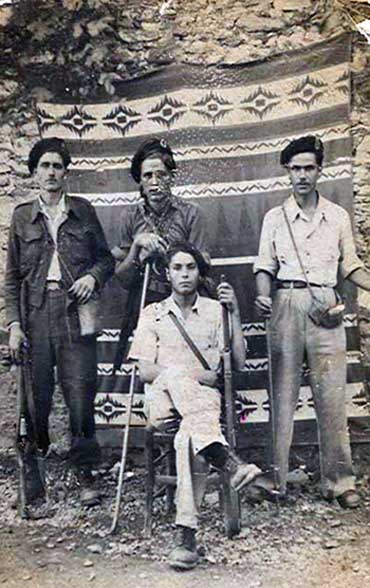
When a group of communists came to the village and Dad was almost killed by one of their members for being in the wrong place at the wrong time. It was only through a sheer luck that a relative of dads was in the vicinity that saved his life. This same relative (bless his soul) at great risk to his life put his arm up against the communists weapon just when he was about to shoot my father dead. The weapon discharged harmlessly into the air and Dad. After this incident my father ran away as fast as he could outside the village. After hiding out until dark, Dad made his way into the mountains where one of his elder cousins who was with the right wing forces was hiding. After his near death incident Dad became a full time member of the “HITTES” (Χηττεσ – right wing irregulars) fighting against the communists.
I must also add that despite my father fighting the communists, he never had a bad word against them but recognised that many Greeks were forced to make choices depending on which side was superior at that time and location. Education and up to date communication was poor which also led to the diverse nature of the communist and the right wing forces. My Dad did say that they were just as bad as each other and that atrocities in some cases was for profit and not for any ideological reasons. In fact one chap my father met again on his first trip to Greece was a man who sold the weapons to the other side for profit. When this man recognised my father he went pale and disappeared quick smart never to be seen in the village. Another alleged fighter killed people in cold blood for the fun of it and incidents like these turned my father into the man we knew. I guess with time I will write upon his Civil war experiences.
Some 64 years later when dad was 85, I took him back to Greece for a two month holiday in order to breathe some new life into him, visit his remaining relatives and enjoy the tranquility of his birth place. On the trip also came my youngest nephew and my father’s grandson, which made it the father the son and grandson trip to Greece. It was to be an exhilarating, exhausting and very profitable from a relationship point of view and we finally got to know each other.
During the day for the next two months, Dad and I fought every day verbally and on each occasion we got to know each other a lot better than we had known each other for the past 64 years. We shared stories, jokes, life experiences, hurts, grief’s, dreams, past ambitions, the future and personal matters that only a father and son shared. Neither of us gave each other an inch and I realised where my stubbornness and never give up attitude came from. At night, however it was different, we would sit and watch the local television stations and talk in an amicable manner as if nothing had occurred between us during the day. Dad would sit on the couch and I at his feet either cross legged or lounging length ways looking up at him occasionally when discussing the future.
One of the taxi drivers we met in Sparta was the grandson (Peter Prekezes pictured left) of a famous Laconian Communist fighter who was renowned for his leadership and fighting abilities whom my father knew of. I took a photograph of the grandson with my father for posterity. The young bloke was eager to hear of his grandfather (Captain Prekezes) from a fighter of the opposite side.
Dad gave young Peter information about his grandfather that he was a great leader of men but was unfortunately killed during the Greek Civil war. It appeared that this young bloke was trying to find out as much as he could about his grandfather. It was a chance meeting but well worth the experience for both.
Dad married my mother in 1949 whose elder brother had joined the communists and who my father saved from being shot by the “HITTES” (Χηττεσ – right wing irregulars) who had captured him. It was this uncles daughter Helen (my first cousin) from whom I purchased the land with the olive tree adjacent to my parents home. Talk about love overcoming all barriers.
During my time with him, Dad had many visitors to the home, all of whom had come to pay their respects to him and to pass on the news of the past, present of the future. It was also through them that I finally realised that there was a complete other side to my father, a side that I and my young brother Phillip never knew or were privy to. I found that he was a very compassionate, loving, overly generous and forgiving person who hid behind a veil of granite in not wanting to show his soft side.
It reminded me of a story my mother confided to me in late December 1973. I had just returned back to Australia from my posting with the 6th Battalion, The Royal Australian Regiment in Malaya and Singapore. My mother told me that my father was like a block of granite that many people over the years had tried and failed in their attempts to topple and bring him down. She said that your father always stood up for what was right no matter what the adversities and challenges he faced. My mother then lowered her voice as if she did not want anyone else to hear and said to me softly, that she alone knew what my father had faced and went on to say that if you went closely to that granite rock, you could see the scratch marks and the damage left by those who tried to bring down your father”.
This year Dad, by Greek standards turns 87 and by Western standards he is 86 years old. He is strong physically, his mind is alert, still a stubborn bastard and occasionally will smile that smile which so often evaded us during our childhood. I hope that in 2015 he is still fit enough for another trip to Greece. Although I am now 64 years old, and have been in Australia since the 23 July 1954, I call Australia home. Having said that I still yearn for the mountains of Taygetos in Laconia, Greece with its many meadows, flowers and trees and the tranquillity that it brings.
I would like to think that I deserve an extended holiday after having served Australia in the Australian Regular Army for 30 years, raising four sons as a single parent, contributing to the security and economic longevity of Australia.
Postscript: It will be of interest to note that the olive tree which my father hung me on was on the property next door to mum and dad s home and when we returned in 2013, I purchased the block of land only for the sake of that lone olive tree. I also took back to Greece and buried my left thumb which I had accidentally sawed off with an electric saw and buried it at the foot of the olive tree. One could say that I have a thumb hold on Greece and that it beckons me back from time to time. The land and the olive tree is now part of the Adamis clan heritage and in trust for the Adamis family. The olive tree gnarled and pruned over the years survived the ravages of time and now has two strong saplings sprouting from the original tree.
Disclaimer: Apologies to the purists for the poor grammar and punctuation. I can but try my best to record events, personalities and lives of that bygone era for future generations in the only way I know. From the heart.
The Voice from the Pavement – Peter Adamis is a Journalist/Commentator and writer. He is a retired Australian military serviceman and an Industry organisational & Occupational (OHS) & Training Consultant whose interests are within the parameters of domestic and international political spectrum. He is an avid blogger and contributes to domestic and international community news media outlets as well as to local and Ethnic News. He holds a Bachelor of Adult Learning & Development (Monash), Grad Dip Occupational Health & Safety, (Monash), Dip. Training & Assessment, Dip Public Administration, and Dip Frontline Management. Contact via Email: [email protected] or via Mobile: 0409965538
Pellana (Greek: ἡ Πέλλανα, Paus. iii. 20. 2; τὰ Πέλλανα, Strabo viii. p. 386; Πελλήνη, Xen.Hell. vii. 5. 9; Polyb. iv. 81, xvi. 37;Plut.Agis, 8), was a city of Laconia, on the Eurotas river, and on the road from Sparta to Arcadia.
According to archaeologist Theodore Spyropoulos, Pellana was the Mycenaean capital of Laconia. It is also a former municipality in Laconia, Peloponnese, Greece. Since the 2011 local government reform it is part of the municipality Sparta, of which it is a municipal unit. The seat of the municipality was in Kastoreio.
Today, Pellana is a small village in North Laconia, and it is located 27 kilometers north of Sparta, 5 kilometers west of the main road that connects Sparta with Tripoli. It is built on a hill that is an extension of the Taygetos mountains in the Peloponnese. Pellana is built on an area of 11 square kilometers, and is 370 meters above the sea level. The population of the modern village of Pellana peaked in the 1940s, and ever since it has been reduced to in excess of 200 inhabitants.
The town suffered badly during the second world War, especially during the Greek Civil war where brother fought brother and father against sons and daughters. It is a town that has lost more than its fair share of people as a result of the disastrous civil war. Today however with a population of more than 200 members it is beginning to see a revival of its past. This revival is attributed to the new highway that has been constructed with EU funds and grants.
The town offers visitors the opportunity to visit the ancient tombs located some 400 meters from the main palace that allegedly contained King Menelaus (Master of the war cry and his lovely wife Helen of Troy. It is hoped that a small museum will be located on site to house the many artifacts and objects excavated from the ruins of the palace and the tombs. Artifacts and objects that can rival even that of Mycenae according to Theodore SpyropoulosThis museum however can only be constructed with the support of those living in the Diaspora, the local inhabitants and the Hellenic Republic. The town school which once housed hundreds of pupils post World war II (now vacant) is one possible location for a museum. Another is a new building be constructed near the tombs and close to the ancient palace ruins. Access however is somewhat difficult and infrastructure and accommodation facilities need to be revised to accommodate the potential influx of visitors.
Pellana has seen many of its inhabitants leave the town during times of severe hardships beginning with oppression by Ottoman overlords, droughts, earthquakes, famine, unemployment and war. Although many return, few remain after being seduced by the quality of life found in the Diaspora and only the die-hard remain. Pellana can boast of men and women who have achieved high office and/or distinction in the fields of education, military, medical, academics, theologians, political, business and a host of other careers and employments throughout the ages. Many of them gaining recognition in the Diaspora. Suffice to say all of them are proud to point towards their origins and roots back to Pellana.
The arrival of the modern car has replaced the previous transport that of the horse, mule and donkey and now there are few of the animals to be seen within the confines of the town. Electricity, running water, telephone, internet and access to every day utilities and facilities are available in every household which has raised the standard of living and improved the health and well being if its inhabitants. The town has its own historical society administered traditionally by the women who periodically conduct events to celebrate its ancient past. The average age of its population is approximately 45 with many members reaching the age of 90 years plus. The clean air, access to to health and well being specialists, a strict Mediterranean diet and exercise appears to be the main reasons for longevity.
While agriculture is the main produce of the town, it is the oil groves that provide an income for the many small landowners who till and manage the small fields that dot the town and its surroundings. Many if not all of the agricultural products is for domestic consumption and only occasionally would excess produce be sold in the local markets such as Kastori, Sparta and surrounding smaller villages. The olive oil is pressed by the two main olive producing factories located within the confines of Pellana. These two factories also support the surrounding villages and towns small land owners. Sheep, goats, emus, chickens, cattle, ducks, cows are also maintained and sold to the major towns throughout the year while at the same time providing dairy and meat products for domestic consumption.
A new highway from Tripoli to Sparta as been constructed and goes past Pellana. The highway is scheduled to be completed by October 2014. The highway follows the same ancient road from Pellana in ancient Mycenaean and Spartan periods following the banks of the Eurotas River. Numerous ancient ruins of small towns on the side of the highway were excavated, analysed, recorded, photographed and in many cases covered with a fine layer of stones to preserve the antiquities. As a result of these findings it is believe that Pellana was the hub throughout the pre-Hellenistic, Spartan and Roman periods. Today a new hub is being created on the highway adjacent to the town of Pellana and its ancients ruins to allow tourists and locals to visit the ancient monuments.
It is envisaged that this new hub will also allow the towns and villages that are located up in the Taygetus mountain range better access to Sparta through the town of Pellana. Others are speculating that the highway will repopulate these small towns by the original owners returning to their ancestral and patriarchal homes. It is also speculated that these young families will be able to live in their homes and use the new highway to work at the major towns of Sparta, Tripoli, Kalamatta, or evens Athens and Nauplio which are now brought in closer. The nearest towns to Pellana are Pardali, Perivolia, Alevrou, Georgitis, Kastori (Kastania) Longanikos, Agios Konstandinos, Vergadeieka, Foundeika, Serveika and Agorgiani. Many of these towns were depopulated as a result of the post world war II mass migration to the USA, Canada, Australia, New Zealand, South Africa, Germany and Argentina.
Today the second, third and fourth generations maintain contact using current social media outlets. The use of social media and with the introduction of the internet to the inhabitants to Pellana is opening up opportunities and projects unheard of before. It is of interest to note how quickly the young generation in Pellana has taken to the internet and for many it is an open window to the world. Access to online media such as Facebook, Ancestry sites, Educational sites such as Wikipedia, Encyclopedia Britannica and communication programs such as Skype and VoIP are but the tip of the iceberg.
There are more than two possibilities about the origin of the name “Pellana”. The name “Pellana” has its roots on the Greek word “pella” which can mean “stone” or a “rocky hill”. Indeed, the main waterway in the village is at the base of a rocky hill. Pellana, linguistically, is a cognate of Pella, the capital of Macedonia but also of Pallene, a deme of Attica, Pelle of Ithaca, Pellene of Achaia, Palamedion, the acropolis of Nauplion, Pelion of Epirus, etc., all of them being “citadels on a cliff” or a hill, except for Pelion of Thessaly which is a mountain.[5]
According to modern oral folk tradition is that it received its name by a woman named “Pellania.” This woman was going to get some water; as she was getting water, she slipped and fell into the waterway. So, the village was named “Pellana”, and the main waterway: “Pellania fountain.” Pausanias also mentions the same story during his travels in Laconia.
It was said to have been the residence of Tyndareos, when he was expelled from Sparta, and was subsequently the frontier-fortress of Sparta on the Eurotas, as Sellasia was on the Oenus. Polybius describes it (iv. 81) as one of the cities of the Laconian, Tripolis, the other two being probably Carystus (or, alternatively, Aegys) and Belemina. It had ceased to be a town in the time of Pausanias, but he noticed there a temple of Asclepius, and two fountains, named Pellanis and Lanceia.
Below Pellana, was the Characoma (Greek: Χαράκωμα), a fortification or wall in the narrow part of the valley; and near the town was the ditch, which according to the law of Agis [disambiguation needed], was to separate the lots of the Spartans from those of the Perioeci. (Plut. l. c.)
Pausanias says that Pellana was 100 stadia from Belemina; but he does not specify its distance from Sparta, nor on which bank of the river it stood. It was probably on the left bank of the river at Mt. Burliá, which is distant 55 stadia from Sparta, and 100 from Mt. Khelmós, the site of Belemina. Mt. Burliá has two peaked summits, on each of which stands a chapel; and the bank of the river, which is only separated from the mountain by a narrow meadow, is supported for the length of 200 yards by a Hellenic wall.
Some copious sources issue from the foot of the rocks, and from a stream which joins the river at the southern end of the meadow, where the wall ends. There are still traces of an aqueduct, which appears to have carried the waters of these fountains to Sparta. The acropolis of Pellana may have occupied one of the summits of the mountain, but there are no traces of antiquity in either of the chapels. (Leake, Morea, vol. iii. p. 13, seq.; Boblaye, Récherches, &c. p. 76 ; Ross, Reisen im Peloponnes, p. 191; Curtius, Peloponnesus, vol. ii. p. 255.)
References
De Facto Population of Greece Population and Housing Census of March 18th, 2001 (PDF 793 KB). National Statistical Service of Greece. 2003.
Miltiades E. Bolaris: “Macedonian names and makedonski pseudo-linguistics: The case of the name Pella”
Pausanias
This article incorporates text from a publication now in the public domain: Smith, William, ed. (1854–1857). “article name needed”. Dictionary of Greek and Roman Geography. London: John Murray.
Over the past 40 years of personal research into the village of Pellana, now and again I come across some gems of information that is relevant to the village and its surrounding environment. One of these were the Varoutios Family Tree Chronicles. The gentleman responsible were compiling the list knew full well the importance of recording families and he went to great pains to gather the information from sources still alive in his day.
This gentleman whose name escapes me was a relative to my mother and in fact I am of the belief that it was her Uncle who took the time and effort to put all together into one document. He was born in Pellana and left the village, travelling to Athens to develop further his goals in life. Whilst he lived alone in Athens, he always managed to return back home to his place of birth and speaking to the elders of his time.
He never married and remained a bachelor until his death. Upon his death other relative found the document which he had compiled and in the course of time and space, a copy of the document came into my possession in Melbourne Australia. At first I could not believe my eyes and it suddenly dawned upon me the value of such a historical document even though it had been copied from the original.
I gave a copy to my mother who pored over its contents and remarked that t brought back many memories of her time as a young girl in the village and remembered many of the names included n the document. She did however remark that the document was flawed in some places and that some errors had crept in. These errors were of little significance but still changes would need to be made according to my mother. To this day, I have not made those changes according to my mothers recollection of the past and of the people included in the document.
I took it home and created three volumes each interconnected wit one another in chronological sequence. Once this had been achieved the A3 size document was then reduced to A4 size in order to digitize all three chronicles. The digitization of the document took some time as every effort was made to ensure that the best possible copies were created in PDF format. On completion of the digitization, copies were also sent to Canada and the USA to ensure that they were never lost and at least a copy would remain in existence.
Another copy was entered onto the Pellana website on the server being run by myself in Melbourne Victoria, Australia. The idea was to assist others whose origins were from Pellana had access to the Varoutsios Chronicles.
Peter Adamis
The documents in PDF format found below may be downloaded by clicking on each of the chronicles:
Disconnected and Re-engagement. The following article is in response to all those who are currently finding being of Hellenic heritage a problem and are seeking methods of transport to a safe haven of cultural identity without having to justify their existence in an Australian environment.
Australians are naturally a tolerant lot and are well known for sticking up for the underdog, fighting the good fight and helping a battler get back on his feet. Australians don’t care where a person comes from as long as they can integrate into the Australian environment, abide by its laws and institutions, contribute to the welfare of its people and lend a hand when its society may find itself at odds with another country. The article also covers in brief, a question that is of concern to those Australians of Hellenic heritage, that of the status of future generations and their attitudes towards the maintenance and reinforcement of Hellenism in Australian society.
Have we disengaged from the mainstream of Hellenism? Are we disconnected from our Australian Hellenic communities? Are our youth on the right track regarding their Hellenic roots? Are we doing the right thing to reinforce the positive Hellenic traditions, language, religion and cultural aspects that make us who we are and do we readily identify ourselves as Australians of Hellenic origins. Although the article does not cover the experiences of Hellenism in America, Canada, New Zealand, South Africa, Great Britain, Russia and Egypt where Greeks are known to reside in some numbers, the concepts being explored in this article mirror the Greeks in those countries with some exceptions. The article therefore can be examined at the same level of understanding wherever Hellenism is found.
Australian Hellenic justifications Many of us who may find themselves at crossroads regarding their Hellenism need not worry as long as they do not need to justify their existence or the fact that they have chosen a path that may find themselves at odds with their Hellenic past. So what if many have married outside the Hellenic community. Will these mixed marriage affect the retention and handing down of traditions from one generation to another?
Is it all that important and how does it affect the elderly or the parents? What if the children are not brought up in a Hellenic household does not mean that it’s the end of the world. So what if some of them end up as guests of the Commonwealth as a result of their misdemeanours. So what if others enjoy a community that espouses gay and lesbian rights and that they enjoy their company. Do we forget and don’t support those on drugs? What if people don’t go to church and listen to the priest give out his sermon in Greek?
Who cares if Greek music is not played at home or that children stay out late at night? Is it right that the youth do not respect their elders and look down upon them? Who does it affect if a child is out of wedlock? What is being done to those who have separated and divorced? what action is being taken to e-engage them back into the Australian Hellenic community? Is there any harm in not knowing how to dance in Greek?
Is it all right to place the elders in an old age home because the children are unable to care for them? Will the children visit their elderly parents if they are placed in a home for the aged? Is it wrong to emulate our Anglo-Celtic and Saxon brethren? Is it not right for an Australian of Hellenic heritage wanting to serve in the Australian Defence Force? Where is it wrong to integrate the best of all cultures and live in harmony within an Australian society? Questions that may or may not need solutions can only be found by those seeking them.
What are the solutions if any. The above and below questions beggar to be answered not only by the current generations but also involves the current youth of today and also that of the emerging youth currently still studying at school. How do we reengage the people? How do we reconnect to our heritage? How do we retain our culture religion and language in a society that is tolerant and welcomes the positive aspects of different cultures? Are we to be absorbed and embedded within Australian society without some form of identity that we can point to and say that this is where our we came from.
Australians many times in the past 200 hundred years had to face the same dilemma as the Australian of Hellenic background is facing today, but they in their wisdom were able to rise above the questions that vexed them by embracing Australia as their own and thus were able to retain their Anglo-Celtic and Saxon traditions and heritage that our Australian society is based upon today. We as Australians of Hellenic heritage are now faced with this same paradox that previous cultures faced in the past.
When being Greek is not a dirty word. How many of us growing up in Australia have shied away from our “Greekness” so to speak? How many of us tried to hide our origins in order to blend within the Australian environment? How many of us have neglected our heritage and belittled our origins because it was cool because we wanted to belong to our peer group. (Whatever that may be?) How many of us have anglicized our names because our Australian friends could not pronounce them. We have all been guilty of it at one time or another, even by anglicizing our children’s names to ensure that they are not ridiculed at school. Names such as Panayiota, becomes Patty, Pamela or even Betty. Panayioti becomes Peter or Petros and in some cases Panos. Bistolas – Pistol, Andreas – Andrews, Charalombos – Harris, Kyryiakos – Ken, Kyryiaki – Kyrie or Kerry, Mavros – Black and the list goes on and on, it is endless. Mind you there is nothing wrong with this as it makes life easier for everyone, but as time goes by the Hellenic aspect of the name loses its descriptive meaning.
Taking your lunch to work in the authors day was an embarrassment to him. Carrying his lunch box with macorinatha, (spaghetti) and/or Dolmades and when it was time for lunch and as children we would share our lunches. Other kids would laugh and call us names. However as time went on and we visited our friends homes for dinner, what was on the table, spaghetti and meat balls. What a turn-up for the books. One learnt to obtain a thick skin in those days otherwise they would not have survived the cultural differences.
How many Australians of Hellenic heritage are there in Australia. Not many, a few, a lot, none, are but mere words in the English language to describe a percentage of people. In the absence of any reliable data, including that of the Australian Bureau of Statistics based on the Census; it is somewhat difficult and not possible to come up with reliable statistics that encompasses all of the Australians who have Hellenic origins. One has to look at the immigration figures and follow each individual through their marriages, births, baptisms, divorce, name changes by deed poll and death records to obtain an accurate, reliable and unbiased idea of who has Hellenic origins.
Although the Australian Bureau of Statistics based on the Census gathers information based on religion and language provides a window into ethnicity it is not a reliable and accurate barometer of Hellenic origins in Australia. To compensate the unknown, Australians of Hellenic origins tend to inflate figures to indicate a greater majority than what is based on fact.
Australian Hellenic identity crisis. Those of us who grew up in the 1950s, 1960s and 1970s, suffered from an identity crisis that many have not been able to resolve, even in later life, and as such have not become involved in Hellenic community activities. Who therefore is at fault here, the individual, the parents, the community or the Australian environment that they were raised in? In the 1980s many families disintegrated as a result of internal and external pressures and it was no longer a cultural crime in the eyes of the community if couples divorced or became separated.
It was also a time when individuals looked outside the community to find suitable companions for life and whom they were compatible with to raise families. Based on anecdotal evidence, what is also of interest was the rising divorce rates amongst these couples of mixed marriages. Again based on anecdotal evidence, many of the children lost contact with their cultural roots and embraced a culture that had no roots at all in their historical origins. These are termed the lost Australians of Hellenic background, who are still trying to come to grips with their unresolved cultural and identity issues.
An example of the ‘identity crisis’ is when some groups refer to themselves as ‘Greeks’ and only ‘Greeks’, others refer themselves as ‘Australians’, many refer to themselves as ‘Greek Australians’ and/or ‘Australians of Hellenic heritage’. Whatever the case, each individual at one time or another is confronted with this dilemma and it is only resolved if their surroundings allows them the freedom to make the appropriate choice without peer group or cultural pressure. On the other hand, we have two extremes, one those who deny their cultural origins and the others whom refer to themselves as “wogs”. Those who refer to themselves as “wogs” are, in the opinion of the author, the silliest of the lot, as they lack the emotional and cultural intelligence to make a decision that would identify themselves one way or the other; for there are no “wogs” in Australia.
Those who deny their cultural roots whatever that may be, are doing themselves a dis-service as their children would be denied any historical significance which may leave a void in their lives as they grow into adults. The other group that refers to themselves as “wogs” are also doing themselves a dis-service as they are denying their own cultural background and sending a message out to the remainder of society that they are not Australians. You cannot have it both ways: you are either a Greek who has not taken out Australian citizenship; an Australian who has embraced the Australian culture without losing their cultural heritage, or a Greek Australian and/or Australian of Hellenic heritage.
Oral survey of Australian Hellenic sayings. An oral survey conducted by the author over a period of some 30 years whose aim was to capture the thoughts of Australians of Hellenic background during his generation. These oral notes were recorded in his diary to enable him and others who realized that Hellenism in Australia was at risk of being forgotten. It was also taken at a time when Australians were being faced with a generation who had no idea who they were, had no idea of the sacrifices of those who died at Gallipoli or the fields at the Western front (France); they had no concept of who the drovers were, the convict era and little of Australia’s contribution in two world wars.
Bruce Ruxton the President of the Victorian RSL along with his colleagues at the national level realized that something had to be done to revitalize and re-energize the youth of the day and educate them in Australian history and the achievements of their forefathers. Bruce Ruxton was the man for his day and subsequently his legacy and examples influenced the author to emulate him at the Australian Hellenic level.
Therefore it should not come as a surprise, that this interest in traditional values had grown to include others who were of the same ilk. The concept of retaining the cultural values and history of their forbearers and those who made the journey to this country quickly became a passion and the driver to see Hellenism survive in Australia. This interest in traditional values was also recorded to enable and assist those responsible for the maintenance of Hellenism in Australia and to provide a platform for the first, second, third and fourth generations Australians of Greek heritage. Some of the comments recorded are provided below:
1. “I never want to lose faith in “Greekness” and Greece. I love my Greek origins, but for Greeks, I weigh them on an individual basis and have no faith in them as a group”. 2. “I love my Hellenism but don’t wish to be associated with the community aspects as I do not find them stimulating or of any interest”. 3. “Why should I attend the community cultural events or parades when I can watch them from the comfort of home on television or the internet”. 4. “We who are of Hellenic background have much to learn from our Australian brethren”. 5. “For some strange reason we are always suspicious and jealous of each other and looking to see what we can get out of a situation and not contributing back into our community”. 6. “I am a “wog” and proud of it”. 7. “I have no time for the Greeks, they deserve what they get”. 8. “Greeks are only good with each other when faced with crisis on a monumental scale that affects all of them”. 9. “The Greek newspapers in Australia don’t have enough English sections to make it of interest to me”. 10. “I wish my parents taught me Greek when I was younger, I miss that part of my cultural background”. 11. “Mum and Dad would play Greek music at home and although I used to get embarrassed when I brought my Australian mates home, I think fondly of that music whenever I hear it again now as an adult”. 12. “The Greek Orthodox Church has failed to live up to its image and is more interested in assets, money and influence than thinking about us Greeks here in Australia”. 13. “The Greek media has failed to keep up to date with technology and is living in the previous generation”. 14. “There is no such thing as the Greek vote here in Australia as we are not as united as in the past”. ”Its each man for himself when it comes to politics., It’s just a joke”. 15. “I never learnt how to dance in Greek and whenever I hear a particular song or music, something within me wants to get up and dance, even though I cannot dance Greek”. 16. “When Mum and Dad divorced we lost contact with our grandparents who would always speak Greek or tell us stories of the old country”. “It’s too late now as they have all passed away”. 17. “I am a Greek Australian and proud of it” and/or I am an Australian of Hellenic origins and proud of it”. 18. “Why is the Greek Orthodox church getting involved in community politics” “It’s no wonder why I don’t go to church any more”. 19. ” I am not a wog, dago, spag, grease ball, but an Australian of Greek background”. 20. “I am an Australian who has lost links with his Greek heritage”. 21. “I think I have some Greek roots but I don’t know how to locate them, as my relatives have passed away”. 22. “I can’t see the problem, you are either an Australian, Greek or Greek Australian (Australian Greek) whatever”. 23. “I don’t see the Greek Government doing anything to help Australians of Greek heritage”. 24. “I love being a Greek, but I get embarrassed by what Greeks are doing to each other”. 25. “We in Australia have lost our cultural and traditional roots because we don’t believe they are relevant in today’s society”. 26. “We who are divorced and separated have no community or clubs that we can go to so that we can relate to others who have the same background”. 27. “I have a Greek Orthodox background but have lost faith in the Greek Orthodox Community here in Australia, because they are not setting a good example”. 28. “Hellenism, traditions and culture should be taught at home, otherwise where else are we to learn about our heritage”. 29. “Being Greek is not a dirty word”. 30. “We lack any role models who are not afraid to say they have a Greek background”. 31. “Watching Greek sporting identities is the only time where I can feel proud of being Greek”. 32. “We are losing many of our elderly to Aged Care homes and as result we are also losing a part of heritage through the absence of links to the past”. 33. “We Greeks are always thinking how we can make a deal and what is in it for us”. “What about giving back to the community”. 34. “I am gay and that’s why I don’t go to Church”. 35. “I wish there was an easy way to speak and write Greek” 36. “I was in Jail and I don’t think my community wants me near them anymore”. 37. “I am pregnant and my boyfriend has left me”. 38. “I cannot find the way to get off drugs, I am hooked on them”. 39. “I learnt to speak Greek at home”. 40. “The church says it forgives but I don’t feel that I am accepted”. 41. “I am living with my Australian girlfriend and my parents don’t want to see me anymore”. 42. “Why don’t communities adopt an old age home and visit the elderly. They still have much to teach the current generation, if only to tell their stories”. 43. “We only spoke English at home, it was easier to communicate when our Australian mates came for a visit”. 44. “We are making excuses and deluding for ourselves by placing our elderly in Aged Care Homes”. The Elderly are our heritage, a veritable goldmine of knowledge of the past”. 45. “There are no clubs or communities that cater for the youth, that’s why we party at night at other venues”. 46. “I love hearing Greek music and watching Greeks dance”. “It makes me feel Greek”. 47. “Just because I don’t have a Greek background does not mean that I don’t like things Greek”. 48. “As long as my children are aware of their Hellenic heritage is good enough for me”. 49. “Being a Greek in Australia is ok”. “I am not ashamed of it, in fact I am proud of my Greek heritage”. 50. “Where does one go to find out about their Hellenic past”. 51. “Every time we Australian Greeks create something great, another Greek comes along and destroys the institution or structure”. 52. “All Greeks love to be leaders such as a President of a community, his own boss and dislikes having to follow someone else’s idea or vision for the common good of the Greeks”. 53. “We must learn from our Anglo-Celtic and Saxon brethren and understand that the benefits of unity, discipline and being part of a team can produce positive results”. 54. “We Greeks are an undisciplined lot and think we can fix the world’s problems”. 55. “The Greek language and religion are an important part of being a Greek”. 56. “I wish our children would marry someone who is of Greek heritage, it would make life so much easier”, so say the parents and grandparents. 57. “Our children have married “Xeni” (foreigners), how can we communicate and pass on our traditions and cultural values to their children”. 58. “Greek history, food, music, dance and faith are an important part of identifying with Hellenism”. 59. “I love both the Australian and Greek cultures”. 60. “We should be proud of our names, why must we anglicize our Hellenic names”. 61. “I don’t find many Australian Hellenic communities appealing to my generation”. 62. “I don’t care if they marry outside our culture, as long as they remember their Hellenic origins and cultural values”. 63. “The community leaders are reluctant to hand over the leadership reins to the youth” 64. “I wish I could afford to go to Greece and visit my Hellenic origins” . 65. “I wish our leaders followed up on their words of action instead of making themselves look good. We are not a stupid people”. 66. “Those in leadership positions should look to deeds and creating institutions that will stand the test of time instead of just talking about it”. 67. “Believing and promoting your heritage does not make you less of an Australian”.
Retention of Hellenism? Is Hellenism in Australia to remain as it is or will it develop into something that is an imitation of Hellenism in an Australian landscape? What is very clear from the above comments, is that ‘Hellenism’, its culture, religion and traditions must begin at home. That Australian Hellenic community organisations should provide a stimulating environment where people of all ages can come together and share ideas of the old and blended with the new. Community centres therefore need to review their mission statements and objectives to create an environment that will embrace all individuals, no matter what their status is at the time.
The Greek Orthodox Church, the Greek news media and the Greek Government are all stakeholders in retaining a vibrant and active Hellenistic culture within the Australian environment and should be seen as encouraging the trend to retain Hellenic language, religion, traditions and culture of Greeks within the broader Australian Community. The other important stakeholders in this case are the parents of mixed marriages who strengthen their families by embracing both cultures and thus weaving them within the Australian fabric of society. In most cases, it is the women rather than the men who have married outside the Hellenic community that try and retain the Hellenic culture by ensuring their offspring’s do not forget their Hellenic roots.
Whether the children of these marriages acknowledge it, is another matter. What is important is that the parents of these mixed marriages instill in their children the positive aspects of the Hellenic culture and traditions. These facts again are based on anecdotal evidence and facts gathered over time and cannot be corroborated by hard documentation or unbiased statistical data.
Stakeholder Responsibilities. The above stake holders have much in common, but fail to reconcile any differences they may have, instead of looking at their self interests and do what is in the best interests of Hellenism in Australia. Communities should not always have to wear the brunt of responsibilities, but need support and encouragement to ensure that ‘Hellenism’ as a way of life survives as a cultural identity within the broader Australian, abiding by the laws of Australia and supporting its institutions and freedoms that we (Australians) take for granted.
Leaders, supporters and influential personalities within the Australian Hellenic community should emulate their Anglo-Celtic and Saxon brethren and do whatever is necessary to reinforce ‘Hellenism’ as a model of cultural identity for future generations, without any of the “negative and outdated baggage’ that may be associated with it. Hellenism to survive must be supported and reinforced by the Australian and the Hellenic Governments, Australian Hellenic institutions at all levels, (Industry, Political, and Academia), the Australian Ethnic media, the Greek Orthodox Archdiocese of Australia, the Australian Hellenic communities and by individuals themselves. It’s a responsibility that cannot be shrugged off.
Summation. Therefore in summary, the challenges that the Australian Hellenic community is faced with is to acknowledge once and for all that it’s ok to be an Australian of Hellenic origins, proud of their past and living in an Australian society according to its laws and institutions. Furthermore, current community leaders should also be seeking to strengthen their communities be re-engaging those people have strayed and/or have been absent and attempt to find means of revitalizing and reenergising their interest within the community. Leaders must review and build cultural centres that will retain traditions, dances, culture, histories no matter what the format, whether its oral, written, visual or living monuments. Do not neglect the small clubs and communities that were created and try to absorb them without paying the appropriate respects to those who created them in the first place.
Cultural centres must be implemented now, before those living in aged care homes who are the only living source of oral histories, food recipes, songs, dress, traditions, storytelling and a gathering of diverse cultural ideas before they cease to exist. Our Hellenic cousins in other parts of the world have in some cases failed to realize the significance of retaining Hellenism and have been absorbed slowly into the dominant culture that surrounded them. Past transgressions, grievances and petty jealousies should be put aside for the common good of Hellenism within the Australian environment and future generations will be thankful for their predecessors foresight.
BELIEVING AND PROMOTING YOUR HERITAGE DOES NOT MAKE YOU LESS OF AN AUSTRALIAN. THEREFORE FOR HELLENISM TO SURVIVE IT MUST BEGIN AT HOME.
References: A. Diary Notes – Peter Adamis – 1980 to 2002 B. Photo – original model by Marble design -https://www.marblebydesign.com/classics.html
In of 1926 two relatively small tholos graves were excavated by Th Karachalios on the place of assembly “Spelies”. On the same place of assembly vaulted a cutout was discovered 1970 by the director at that time of the Ephorate G. Steinchauer.
The large tholoi graves and the prehistoric remains on the Acropolis from Pellana became during the scooping out open, which were led by the present director of the Ephorate Dr. Th Spyropoulos, 1980-1995.
This formed specific studies for strengthening and covering the large tholos grave for direction of the re-establishment of antiques in the Ministry of the culture, but work did not still begin. This it most important monuments of the place of assembly:
Kirchhof of rock cut those tholos graves, dates period on the place of assembly “Spelies” to the Mycenaean. The largest was designed in the early Mycenaean period (1500 B.C.); the diameter of its tholos was 10m. It is certainly a royal grave.
The Acropolis of Pellana, on that of the conserved Remains of the walls dated also dated to the Hellenistic period is ruined and to the period of Frankish rule.
The Acropolis set up by Pellana on the hill “Palaiokastro”, where new scooping out into bright remains gotten by the dwelling led, dates to the early Helladic period (possibly one palatial structure).
On the first terrace east and after the top side of the Acropolis one was uncovered by probably many more tumuli, period (2500 B.C.) dates to the early Helladic. Tumulus by Steincrepis one surrounded. Goods in situ found funerals and dump.
On the south upward gradient of the hill was uncovered part of a regulation, which was inhabited in the Mycenaean and in the Hellenistic periods. A outstanding stone paved road of the Mycenaean of date, which was repaired later, lines of the east foot of the Acropolis to the top side or to another place of assembly on the hill, in which it is expected, to be found an important building, possibly the Mycenaean palace of the range.
The Excavator Dr. Th Spyropoulos suggests that Pellana is the Homeric city Lacedaemon, in which Menelaus and Helen its palaces had.
Source:Original online resources no longer available
Postscript:In 1973 on my first visit to Pellana as a young man I remember coming from Sparta on the bus and saw to my right opposite the ‘Rassias Castle’ to upright pillars with a ledge laid on top. May years later around 1991 I notice that the two pillars were no longer in place and that a small pillar was down. where the remains o the other pillars and ledge went is not known.
Who was Maria Koulogiannis is a question that many may ask. I for one cannot remember her as a youngster as I was far too young. But Maria knew of me as she was a few years older and we were both born in the same village called Pellana. In fact were related in some obscure way and it would not be for some forty years later that we came into contact with each other again.
Maria would often write to me in Australia during the time I was a single father of four sons and only through my parents did I in fact become acquainted with Maria. Her communication with me was in regards to our village and her letters to me were all about her passion for the village.
In her letters she would write about people that she knew in Australia and of her relatives who had decided to live in Australia rather than America (USA). Maria had left Pellana and went to live in the USA while others of her kin travelled to Australia. Only through the occasional visit to Pellana would she meet up with her relatives and friends of her youth.
Maria’s family in the USA. As time wore on and her letters became few I thought that Maria had moved on with her life and had relocated to another part of the USA. I got remarried to my lovely wife Yovanna and we made our home in the leafy suburb of Watsonia. Although our home was open to the four boys, they had all grown into young men and one by one left the nest so to speak. Terrible time for me as I was and still close to my boys.
Having digressed I must add that out of the blue I received an email from Maria stating that she had moved and that she happened to visit the website that I had created on Pellana. Maria was overcome with emotion that someone from her own village had created a site specific for the village and would send me emails advising of any changes to her life and of the people that she had met.
One such person was Great Uncle Chris (Margarites) Thodoropoulos who lived and is still living at the time of writing in Chicago USA at the age of 103. In fact years later the son of Chris, George Thodoropoulos advised me that he had also met Maria and that he had helped her relocate to Florida. It was becoming a small world indeed.George and I keep in regular contact along with many others whose origins are from Pellana. Below is an extract of George Thodoropoulos message to me on his interaction with Maria.
I tried calling Maria this past week while on the road…I had not heard from her in a while, so your news about her saddened me. Although I never met her until last October, I had talked to her periodically on the phone about my dad for about 10 years. I helped her find the apartment she was living in via a few referrals I gave her when she was looking for a place to live in Florida…She was very grateful for the help. I made a point of visiting with her when I passed through on business. We spent the entire day visiting, eating and driving….a very nice lady to say the least and she will be missed. George Todd Thodoropoulos 12:21pm Jul 21 Face book.
During this time I also ventured onto Face book and to a new world of social media. I soon found that Maria had also mastered Face book and we would often converse with each other using this new social media. I would often visit her online page and view all of her photographs and keep up to date with her family get together and other information related to the village and Pellana website.
I am sad to say that I never got to meet Maria as she lived in the USA and despite a few visits back to the old village and place of our birth, our paths never crossed. Her passing came as a complete shock to me even though I was made aware that she was having treatment for health related reasons and it was thought judging by her positive comments that she was doing well and keep on top of things. At no stage did she make us feel that she was losing the battle and at no time did she seek sympathy but had a positive word for all and asunder.
Her passing was a tragic loss to the many that knew her and I for one knew that I would miss her positive and likely comments. As such I promised myself that when the time came, I would sit down and write a small article to Maria Koulogiannis, a woman who I never met but nevertheless felt some bond with as a result of our place of birth, Pellana. As a tribute to Maria I copied all of her Face book messages and photographs and created an article specially dedicated to her. The Condolence’s Section’ alone tell a story and of the people she touched. The photographs also communicate to all a mother who brought up her children in a world far from her birthplace and the selected comments are also a tribute to Maria.
I am a great believer in recording the lives of those people who make a difference to the lives others. Maria Koulogiannis during her life touched many people and such deserves to be remembered not only as a Pellaniote but someone who kept alive her heritage and love of life by passing it onto her children and encouraging others to do the same.
The Voice from the Pavement – Peter Adamis is a Journalist/Commentator and writer. He is a retired Australian military serviceman and an Industry organisational & Occupational (OHS) & Training Consultant whose interests are within the parameters of domestic and international political spectrum. He is an avid blogger and contributes to domestic and international community news media outlets as well as to local and Ethnic News. He holds a Bachelor of Adult Learning & Development (Monash), Grad Dip Occupational Health & Safety, (Monash), Dip. Training & Assessment, Dip Public Administration, and Dip Frontline Management. Contact via Email: [email protected] or via Mobile: 0409965538
PHOTOGRAPHIC ALBUM
FACEBOOK COMMENTS
MESSAGE TO (GEORGIA SAVVIDIS) FRIEND OF MARIA KOULOGIANIS Dear Georgia, As we are not connected via Facebook I am writing to you via Maria Koulogianis facebook connection. My name is Peter Adamis. I live in Melbourne Australia. My father this evening advised me that Maria Koulogianis had passed away. Please tell me that its not true. My father was advised by his sisterwho lives in Pellana Greece. My email address for contact is [email protected] or [email protected] Can you please advise me urgently. Regards Peter
Dear Kathy, My name is Peter Adamis from Melbourne Australia. Can you please advise me on the health status of Maria Koulogianis. My father gave me some bad news tonight. News he received from Pellana Greece. I hope that Maria is fine. You may contact me also via email at [email protected] Regards Peter Adamis
Dear Peter, I am sorry to tell you that Maria passed peacefully on the 18th surrounded by her family. If you’d like to contact one of her children this is her daughterhttps://www.facebook.com/auntietulla
Dear Peter, I am sorry to tell you that Maria passed peacefully on the 18th surrounded by her family. If you’d like to contact one of her children this is her daughterhttps://www.facebook.com/auntietulla
TO TULLA CONWAY (MARIAS DAUGHTER)
My dearest Tulla, On behalf of my mother and father (Vasilios and Calliopi Adamis, Myself and family and all of our relatives whose origins are from Pellana, we send you our sincere condolences to you and your siblings and family. My father was advised of your dear mother Maria. Your mother and I corresponded with each other over the years as we both had a love of our village Pellana. Your mother was a fighter and never gave up from what I could gather from her correspondence. May she rest in peace in the bosom of our creator. She was a great and beautiful human being. Condolences to all. We shall remember her in our prayers. Peter Adamis Melbourne Australia.
Maria. Thank you. I promise to call you. I can’t get my mom on the phone with too many people but I will try my best to get her to talk to you. Its still new to her. She is still shocked. Thank you. Talk to you soon. 🙂
Tulla and family, I am so sorry for your loss. My thoughts and prayers are with you.
Tuesday July 24, 2012
Maryline
Tulla and family, I am so sorry for your loss. My thoughts and prayers are wilth you.
Tuesday July 24, 2012
Laura
In looking at your mom’s pictures, she looks great! I am sure she had a wonderful life and was blessed by her family. She is in God’s hands now, and has a new journey to fulfull. Bless you and your family during this time.
Tuesday July 24, 2012
Marti
Tulla, I am so sorry for your loss, you and your family are in my thoughts and prayers during this difficult time. Love, Marti
Monday July 23, 2012
Tatiana Harden
Dear Tulla, I am very sorry for your loss. You and your family are in my thoughts and prayers. God bless you and your family!
Monday July 23, 2012
Latorra Randle
Tulla and Family, I want to extend my prayers to you and your family doing this time. Let us know if you need anything. We are all here for you. Our s to you. Love you Tulla!!!
Monday July 23, 2012
Dwaine Angus
Tulla like God’s prayers be with your family and you.
Monday July 23, 2012
Stefanie Cataldo
Tulla and family- Your in my thoughts and prayers!
Monday July 23, 2012
Georgia Houndris Savvidis
Dearest Tulla and family. My most sincere s for your mom. She was an amazing and strong woman. May God rest her soul and may she always be with you in spirit. Love Georgia & Stathi
Saturday July 21, 2012
Scott & Debbie Palucci
Dear Peter,Cheryl,Heather,Peter and family, We are so sorry to hear about Maria. Sending our love and prayers. Scott,Debbie,Amanda,and Sean
Saturday July 21, 2012
The Sigalos family
dear tulla and familywe just herd about your mom today. we are so sorry for you loss. she was a wonderful person and she will be missed by all that knew her. may her memory be eternal.
Friday July 20, 2012
Peter Adamis
s to Maria Koulogianis children family and relatives. A dear friend Maria Koulogianis whose origins are from Pellana Lakonia Greece. Correspondence over the years on her love for place of birth and the people she met made her a special person. Maria was a wonderful human being and will be sadly missed. s and may she rest in peace. Our prayers are with her family. Peter Adamis, Vasilios and Calliope Adamis families – Melbourne Australia,
Friday July 20, 2012
Melissa (1st grandchild)
Gramma I miss u so much already!!!! I love u so much!!!! I can’t wait for Nate and Isabelle to get older so I can share all the stories and good memories of u with them. God couldn’t have blessed me with a better gramma or Yia Yia for me and my children! Thank u so much for everything u have done for me, all the advice and guidance u have given me on how to be a good mom, and all of the joy and laughter u brought into me and my kids life. U will always be in my heart and I look forward to being with u again some day!!!!! Xoxoxoxo from me, Marcus, Nate, and Isabelle!!!!!!
Friday July 20, 2012
Brittany Gibson
I would like to extend my most heart felt s to the family and friends during this time of greif. I had the pleasure of meeting this wonderful woman and know her to be a very loving Grandmother and now Great Grandmother to Missy and ger children. Eventhough your heart is breaking find comfort in the open arms of our Lord and Savior Jesus Christ. Brittany
Klephtes (Greek: κλέφτης, pl. κλέφτες – kleftis, kleftes, which means “thief” – and maybe originally meant just “brigand” were highwaymen that turned self-appointed armatoloi, anti-Ottoman insurgents, and warlike mountain-folk who lived in the countryside when Greece was a part of the Ottoman Empire.
They were the descendants of Greeks who retreated into the mountains during the fifteenth century in order to avoid Ottoman oppression.[4] They carried on a continuous war against Ottoman rule and remained active as brigands until the nineteenth century.The terms kleptomania and kleptocracy are derived from the same Greek root, κλέπτειν (kleptein), “to steal”. Source: Wikipedia
Other Klephte sources may be found by visiting the following sites as in dicated below:
John Lee Comstock, author, born in Lyme, Connecticut, in 1789; died in Hartford, Connecticut, 21 November, 1858. After receiving a common-school education he studied medicine, and, a few months after receiving his diploma, became assistant surgeon in the 20th infantry. Photograph on the left is Elias Katsos depicted in a typical ‘klephte; outfit for the period.
His books include textbooks on natural philosophy, chemistry, mineralogy, botany, geology, physiology, natural history, and physical geography, a” History of the Greek Revolution” (New York, 1828),
He served at Fort Trumbull, New London, Connecticut, during part of the war of 1812, and then on the northern frontier, where he had charge of three hospitals. At the close of the war he settled in Hartford, Connecticut, and about 1830 began compiling schoolbooks. He possessed much mechanical ingenuity, was a skilful draughtsman, and made the drawings for most of the illustrations of his works.

 Peter Adamis 30 January 2017
 The tomb located opposite other known royal tombs was sealed up for reasons known only to the Department of Antiquities. To the looters it was an open invitation to dig and steal any precocious items that may be of value to collectors.Given the current financial crisis in Greece at the moment, I am somewhat surprised that looters had not attempted it earlier.
  According to rumours circulated amongst the locals, the reason for the Pellana not obtaining approval for further excavation is based on rivalry with that of Modern Sparta who is concerned that it may lose its tourist trade. I am of the belief that this is not the case and that the Department of antiquities stopped the diggings for other reasons not made public at this point in time. In any case there is no infrastructure at this point in time to support tourism on a large scale and Pellana is visited occasionally by tourists on a bus using the modern freeway. This may soon change with the new highway as it is only a two hour drive from Athens, 40 minutes from Tripoli; 10 minutes from Sparta, 45 Minutes from Gytheio (sea port) and one and a half hours from Nauplio a tourist centre and first capital of Greece on gaining independence from the Ottoman Empire.